Soil-Transmitted Helminths in Ghana: A Public Health Discourse
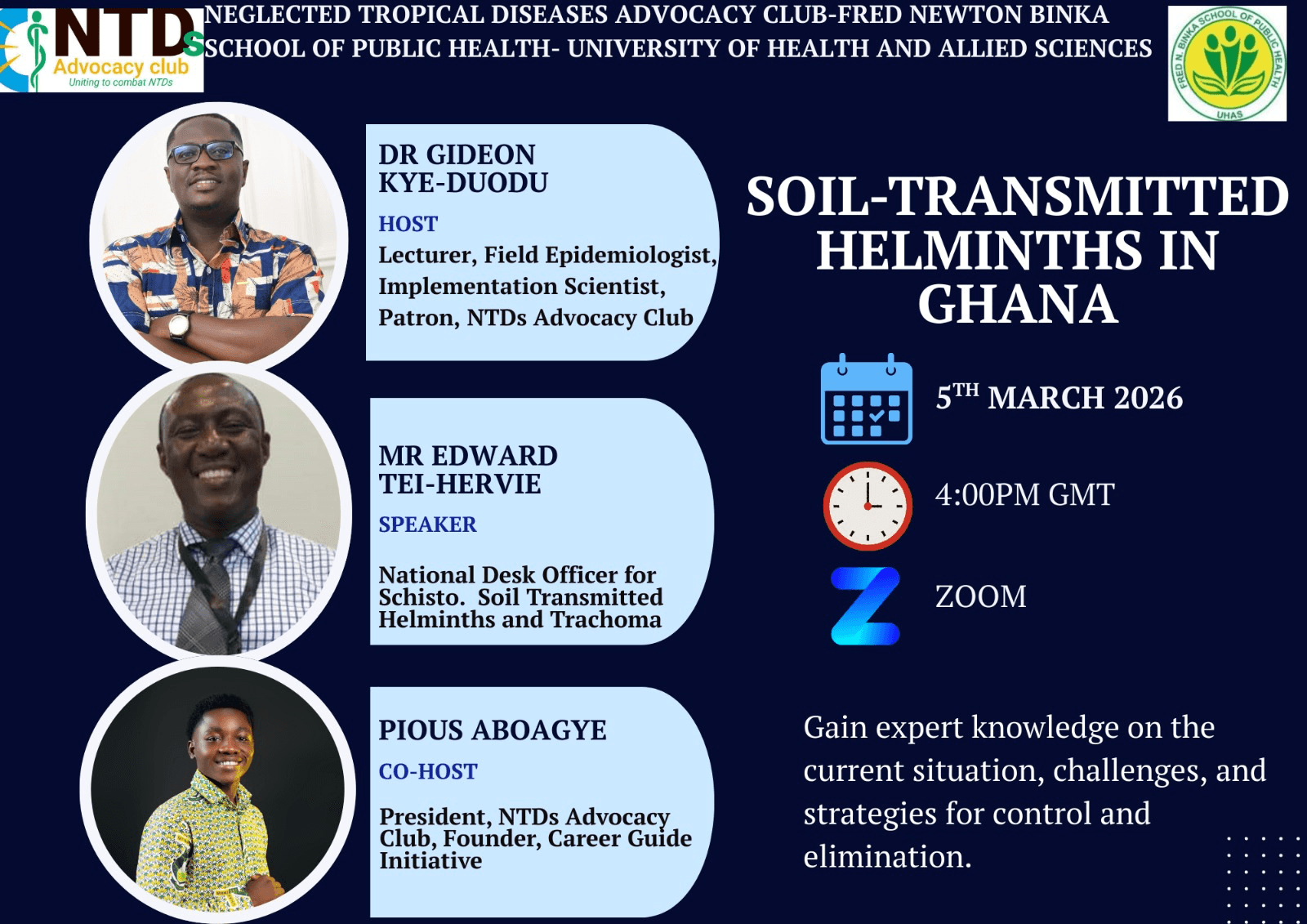
On 5th March 2026, the Neglected Tropical Diseases (NTDs) Advocacy Club at the Fred Newton Binka School of Public Health, University of Health and Allied Sciences, convened an academic webinar titled “Soil-Transmitted Helminths in Ghana.” This scholarly engagement sought to advance discourse on the epidemiology, control, and elimination strategies of soil-transmitted helminths (STHs), which remain a pressing public health concern in Ghana and across sub-Saharan Africa.
Academic Leadership and Expertise
The session was chaired by Dr. Gideon Kye-Duodu, Lecturer, Field Epidemiologist, Implementation Scientist, and Patron of the NTDs Advocacy Club. The keynote presentation was delivered by Mr. Edward Tei-Hervie, National Desk Officer for Schistosomiasis, Soil-Transmitted Helminths, and Trachoma, whose expertise provided a national perspective on policy and programmatic interventions. The discussion was co-hosted by Pious Aboagye, President of the NTDs Advocacy Club and Founder of the Career Guide Initiative, underscoring the role of student-led advocacy in advancing public health priorities.
Contextualizing Soil-Transmitted Helminths in Ghana
Soil-transmitted helminths, including Ascaris lumbricoides, Trichuris trichiura, and hookworm species, are among the most prevalent neglected tropical diseases globally. In Ghana, their burden is particularly significant among school-aged children and marginalized communities where sanitation infrastructure is inadequate. The morbidity associated with STHs such as anemia, malnutrition, and impaired cognitive development poses long-term socio-economic challenges.
Key Themes of the Discourse
Epidemiological Situation: Current prevalence rates and geographic distribution of STHs in Ghana.
Challenges: Persistent transmission due to poor sanitation, limited access to clean water, and gaps in health education.
Control Strategies: Mass drug administration (MDA), integration of deworming programs into school health initiatives, and community-based interventions.
Elimination Prospects: The need for sustained multi-sectoral collaboration, including government, academia, and civil society, to achieve WHO’s targets for NTD elimination.
Scholarly Significance
This event exemplifies the critical role of academic institutions and advocacy groups in fostering evidence-based dialogue on neglected tropical diseases. By convening experts and stakeholders, the NTDs Advocacy Club contributes to the dissemination of knowledge, the strengthening of public health capacity, and the mobilization of collective action toward disease elimination.
Conclusion
The webinar on soil-transmitted helminths in Ghana reaffirmed the urgency of addressing NTDs as a public health priority. It highlighted the intersection of epidemiological research, policy implementation, and community advocacy as essential pillars in the fight against these infections. As Ghana advances toward the goal of eliminating STHs, such academic engagements remain indispensable in shaping informed strategies and sustaining momentum.
More from Neglected Tropical Diseases Advocacy Club, Ghana
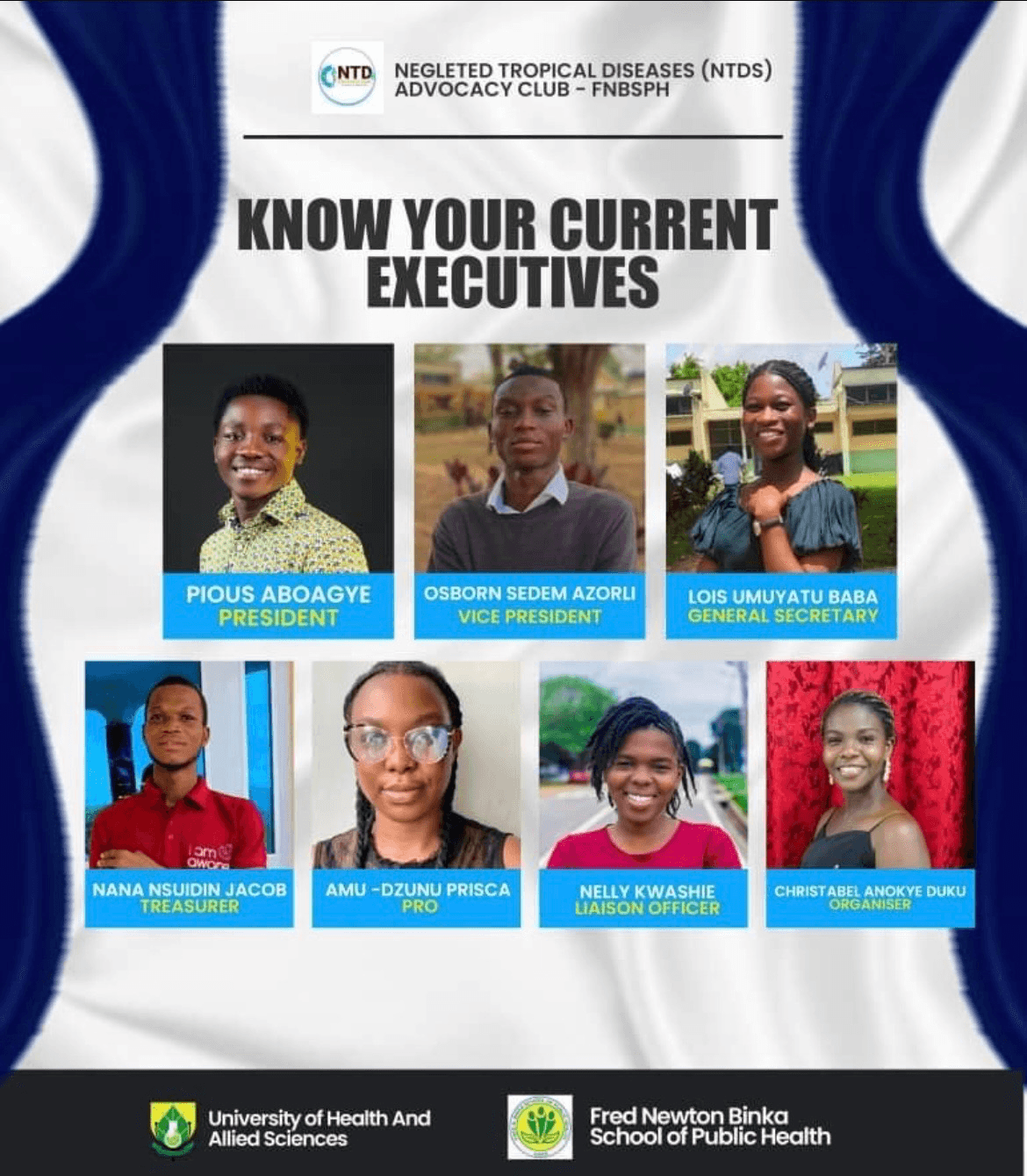
Passing the Baton: A New Chapter for the NTD Advocacy Club (UHAS-FNBSPH)
The outgoing executive team, led by Pious Aboagye, laid a strong foundation of community outreach, public education, and advocacy to combat neglected tropical diseases.

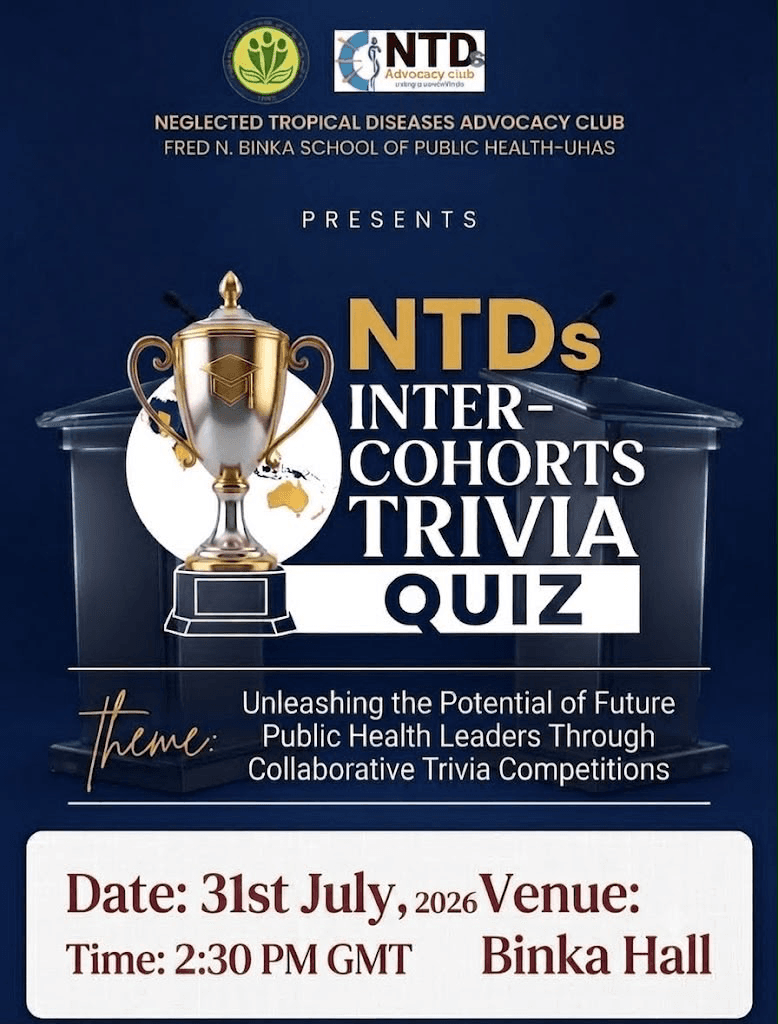
Level 400 Takes the Crown at the Inaugural NTDs Advocacy Inter-Cohort Quiz Competition!
The atmosphere in the auditorium was electric as representatives from all four levels (Level 100 through Level 400) faced off on stage. With intense rounds covering etiology, transmission, clinical manifestations, prevention, and control strategies for various NTDs, every cohort fought hard to claim the ultimate championship trophy.