
Shedding Light on Cutaneous Leishmaniasis
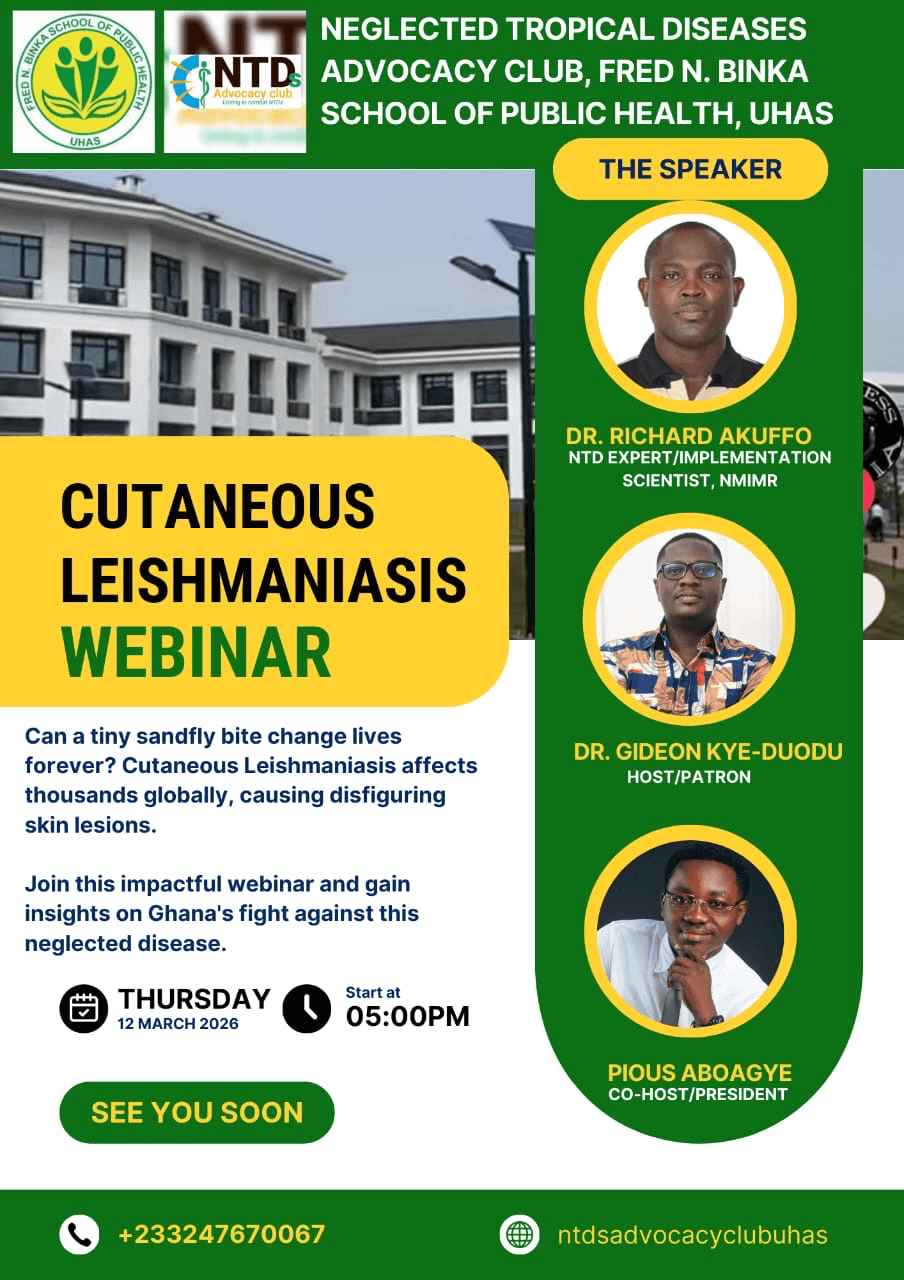
On 12 March 2026, the Neglected Tropical Diseases (NTD) Advocacy Club at the Fred N. Binka School of Public Health, University of Health and Allied Sciences (UHAS), Ghana, hosted a thought-provoking webinar on one of the world’s most overlooked conditions: Cutaneous Leishmaniasis.
The event carried a powerful theme: “Can a tiny sandfly bite change lives forever?” This question framed the discussion around a disease that, while often neglected, leaves lasting scars both physical and social on those it affects.
Understanding Cutaneous Leishmaniasis
Cutaneous Leishmaniasis is caused by the bite of infected sandflies. Though small in size, these insects can transmit parasites that lead to disfiguring skin lesions. Beyond the medical complications, the disease often results in stigma, discrimination, and psychological distress for patients.
The webinar emphasized that tackling Cutaneous Leishmaniasis requires more than clinical treatment it demands public health advocacy, awareness, and community engagement.
Key Voices at the Webinar
The session brought together dedicated experts and advocates:
Dr. Richard Akuffo – NTD Expert and Implementation Scientist, NMIMR (Guest Speaker)
Dr. Gideon Kye-Duodu – Host/Patron
Pious Aboagye – Co-Host/President of the NTD Advocacy Club
Together, they highlighted Ghana’s ongoing fight against Cutaneous Leishmaniasis, stressing the importance of integrating disease control into broader NTD strategies.
Highlights and Outcomes
Awareness Raised: Participants gained deeper insights into the burden of Cutaneous Leishmaniasis.
Advocacy Strengthened: The event reinforced the need for public health professionals to champion neglected diseases.
Community Engagement: Emphasis was placed on education, prevention, and reducing stigma.
Global Connection: By reporting this initiative to international NTD platforms, UHAS is ensuring that local voices contribute to global conversations.
Looking Ahead
The webinar was not just an academic discussion it was a call to action. Cutaneous Leishmaniasis may be neglected, but it is not insurmountable. With advocacy, research, and community-driven solutions, we can reduce its impact and restore dignity to those affected.
More from Neglected Tropical Diseases Advocacy Club, Ghana
Passing the Baton: A New Chapter for the NTD Advocacy Club (UHAS-FNBSPH)
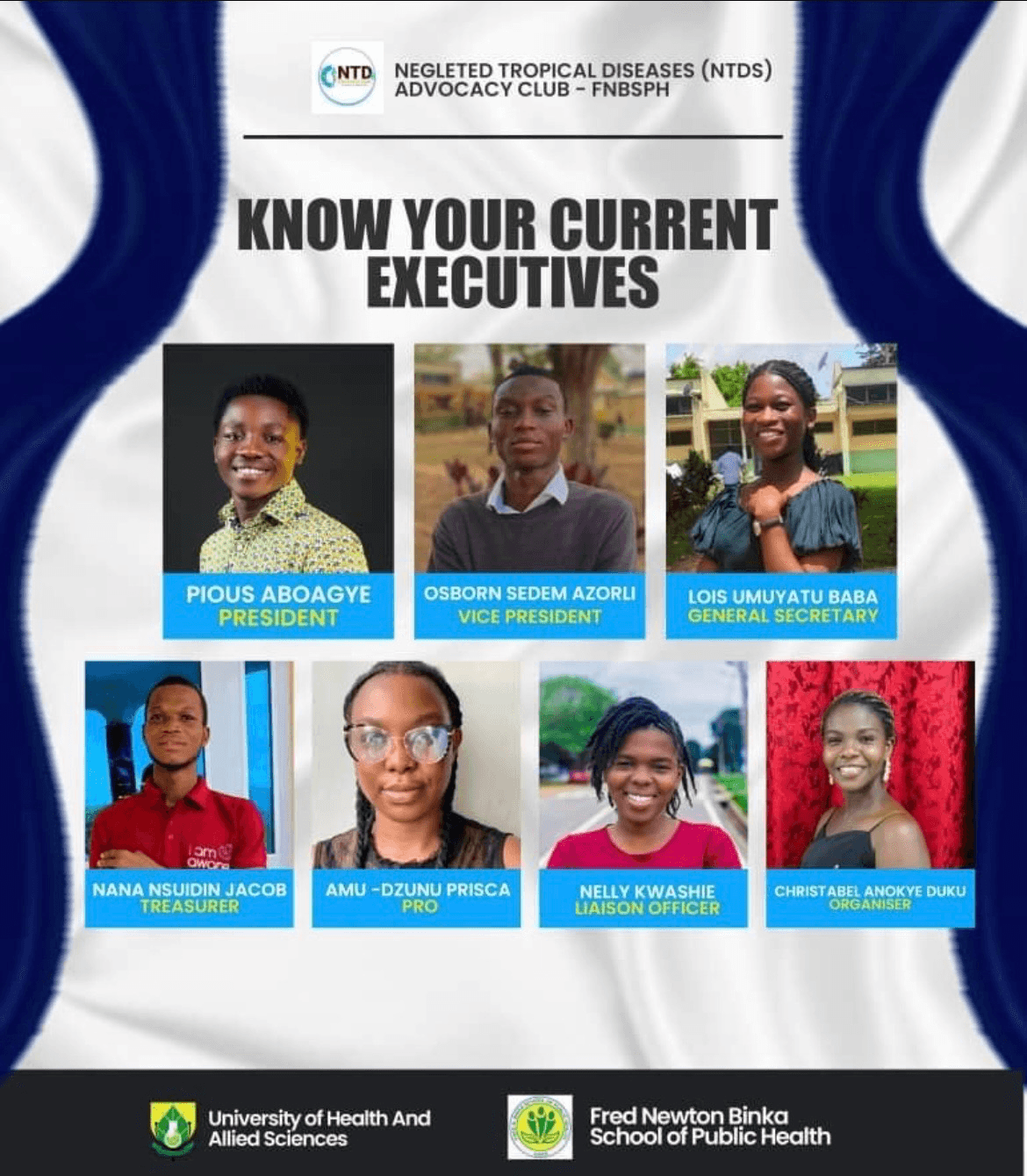
The outgoing executive team, led by Pious Aboagye, laid a strong foundation of community outreach, public education, and advocacy to combat neglected tropical diseases.

Level 400 Takes the Crown at the Inaugural NTDs Advocacy Inter-Cohort Quiz Competition!
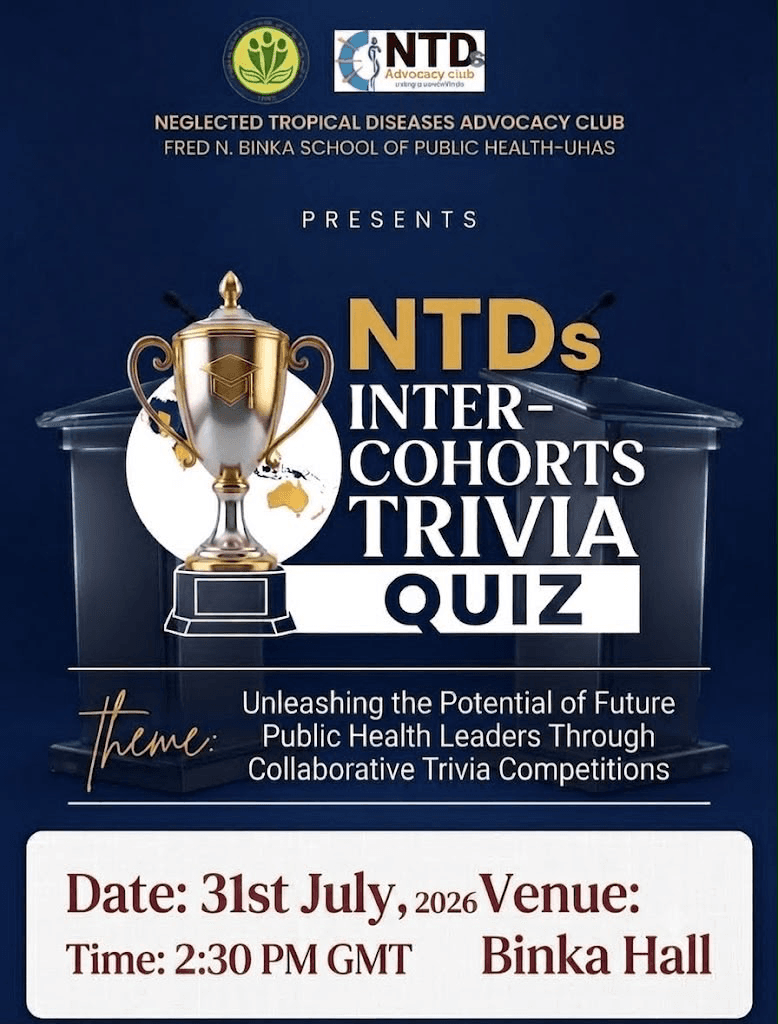
The atmosphere in the auditorium was electric as representatives from all four levels (Level 100 through Level 400) faced off on stage. With intense rounds covering etiology, transmission, clinical manifestations, prevention, and control strategies for various NTDs, every cohort fought hard to claim the ultimate championship trophy.